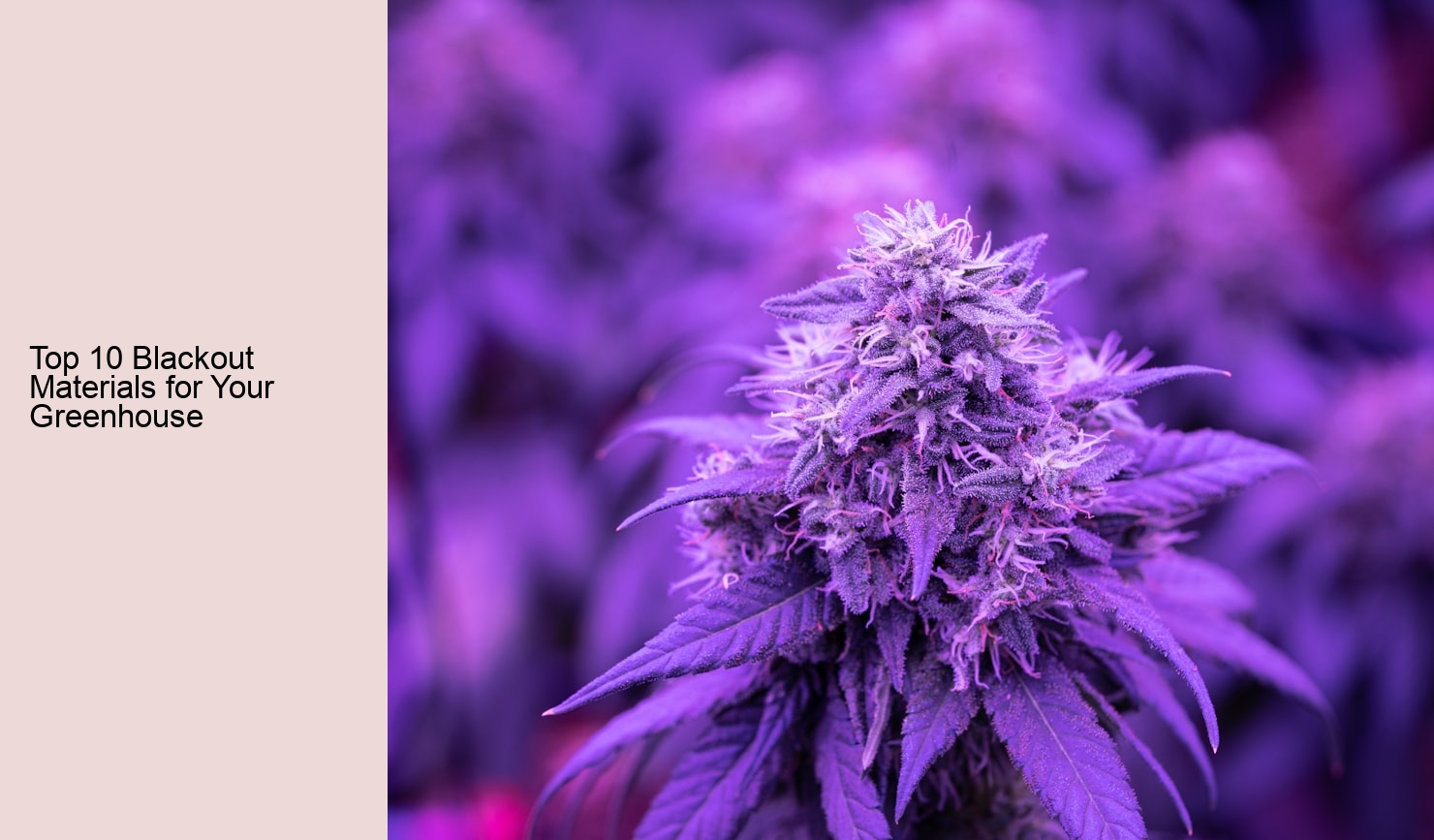
Creating the ideal environment in a greenhouse is crucial for the optimal growth of plants. One aspect of greenhouse management that often requires careful consideration is controlling the amount of light that enters the space. Excessive sunlight can lead to heat buildup and unwanted plant stress, making blackout materials an essential component for many greenhouse setups. These materials help regulate light and temperature, providing a controlled environment for plants that require specific conditions. Here, we explore the top 10 blackout materials for your greenhouse, each offering unique benefits and applications.
Shade Cloth: Shade cloth is a versatile and popular option for controlling light in greenhouses. Available in various densities and colors, shade cloth can block out different levels of sunlight, from 30% to 90%. It is lightweight, easy to install, and can also help reduce heat, making it an excellent choice for greenhouses in sunny climates.
Blackout Fabric: This material is specifically designed to block out all light, making it ideal for plants that require complete darkness to flower or fruit. Blackout fabric is often used in photoperiod-sensitive crops and is highly effective in preventing light pollution from entering the greenhouse.
Polycarbonate Panels: While not a traditional blackout material, polycarbonate panels can be treated or tinted to reduce light transmission. They offer excellent insulation properties, which help maintain consistent temperatures inside the greenhouse. Polycarbonate is also durable and long-lasting, making it a worthwhile investment for permanent structures.
Black Plastic Sheets: Black plastic sheeting is a cost-effective option for temporary blackout needs. It can be easily draped over greenhouse structures to block sunlight. While not as durable as other materials, it is an excellent choice for short-term projects or experiments.
Thermal Blankets: Also known as energy curtains, thermal blankets serve the dual purpose of reducing light and insulating the greenhouse. These materials can be automated to open and close as needed, providing flexibility in light management and energy savings.
Roller Blinds: Roller blinds offer a convenient way to control light in a greenhouse. They can be manually or automatically adjusted to block out sunlight as needed. Available in various materials, including aluminum and fabric, roller blinds are suitable for both small and large greenhouse operations.
Aluminet Shade Cloth: This reflective shade cloth not only blocks light but also reflects heat away from the greenhouse, making it ideal for hot climates. Aluminet is lightweight and durable, providing a long-term solution for light and temperature control.
Whitewash: A traditional method of reducing light, whitewash can be applied directly to the glass or plastic of a greenhouse. It reflects sunlight, helping to keep the interior cooler. Although it requires reapplication, whitewash is an inexpensive and effective method for seasonal light control.
Double-Layer Polyethylene Films: By using two layers of polyethylene film with an air barrier in between, this material reduces light and insulates the greenhouse. The air barrier helps maintain temperature stability, making this option suitable for colder climates or night-time use.
Black Mesh: Black mesh is similar to shade cloth but typically offers a higher level of light reduction. It's durable and easy to install, making it a practical choice for greenhouses that need reliable and consistent light blocking.
Find more about blackout greenhouse .
When selecting blackout materials for your greenhouse, consider the specific needs of your plants, the local climate, and your budget. Each material offers distinct